
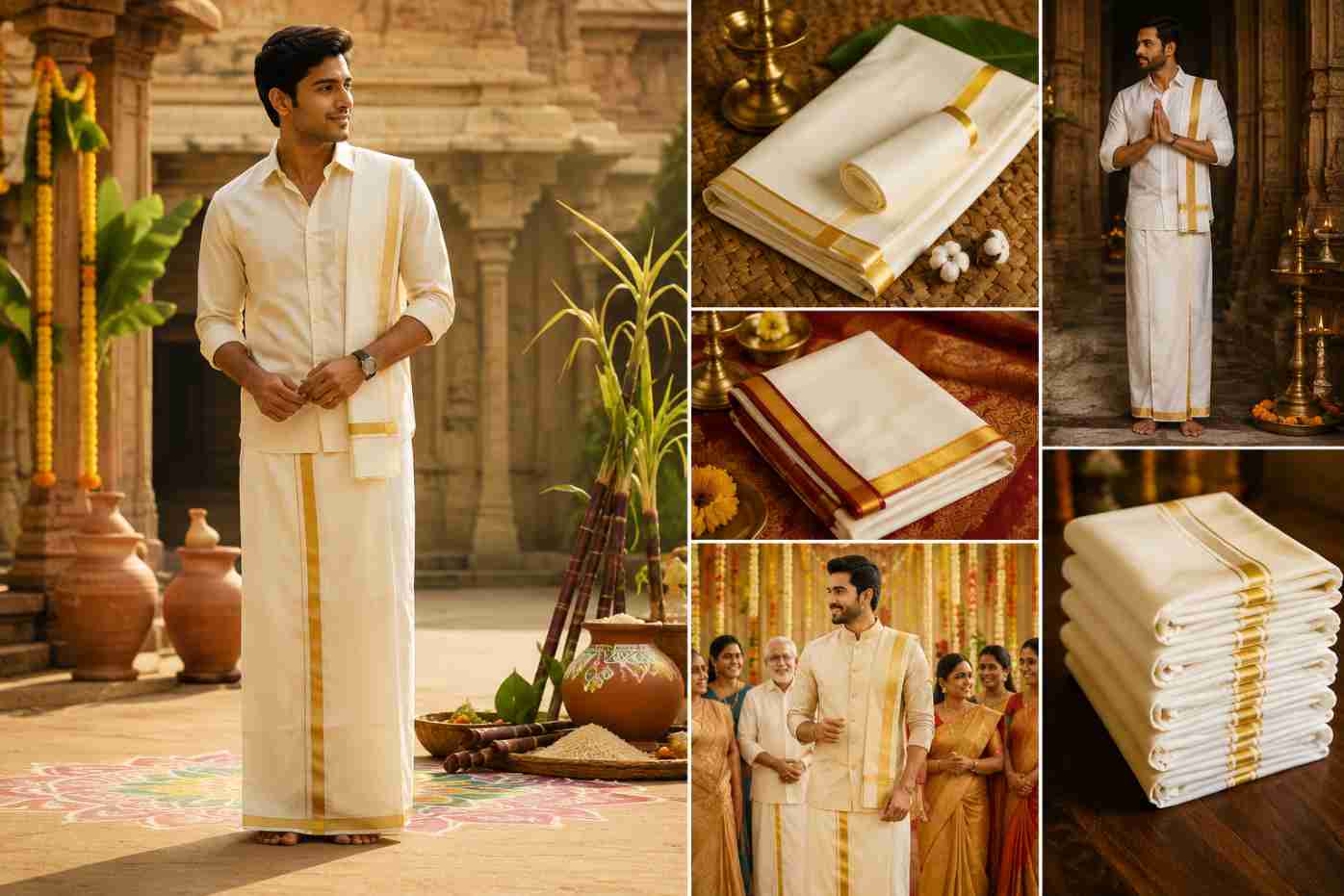
India is a land of diverse traditions, vibrant festivals, and timeless attire. Among the many traditional garments that continue to hold cultural significance, the dhoti stands out as a symbol of heritage, dignity, and elegance. Whether you’re celebrating Pongal, attending a temple festival, or participating in a family wedding, wearing a dhoti reflects respect for tradition while embracing cultural pride.
This Cultural & Festival Guide will help you understand the importance of the dhoti, its different styles, and how to choose the right one for every occasion.
Why Is the Dhoti Still Relevant Today?
Despite changing fashion trends, the dhoti remains an essential part of Indian culture. It is comfortable, breathable, and suitable for both religious ceremonies and festive celebrations. Across South India, especially in Tamil Nadu, Kerala, Andhra Pradesh, and Karnataka, the dhoti continues to be the preferred attire for important occasions.
Many younger generations are also rediscovering the beauty of traditional wear by styling dhotis with modern shirts or designer kurtas.
Choosing the Right Dhoti for Different Festivals
Pongal Celebrations
Pongal is a harvest festival that celebrates prosperity and gratitude. A classic white cotton dhoti with a simple coloured border is the most popular choice. It offers comfort during outdoor celebrations while maintaining a traditional appearance.
Temple Visits
When visiting temples, simplicity is preferred. A plain white or off-white cotton dhoti reflects purity and respect for religious customs. Pair it with an angavastram or a simple cotton towel for a complete traditional look.
Weddings and Family Functions

Silk or silk-blend dhotis with elegant zari borders are perfect for weddings and festive gatherings. Gold-bordered dhotis create a regal appearance and are commonly worn by grooms, family members, and guests.
Religious Ceremonies
For poojas, homams, and other sacred rituals, many people prefer traditional white dhotis with minimal borders. Cotton remains the most comfortable fabric for long ceremonies.
Cotton vs Silk Dhoti
| Cotton Dhoti | Silk Dhoti |
|---|---|
| Lightweight and breathable | Luxurious and elegant |
| Ideal for daily wear and festivals | Best for weddings and grand celebrations |
| Easy to maintain | Requires extra care |
| Comfortable in hot weather | Premium festive appearance |
Choosing between cotton and silk depends on the occasion, weather, and personal preference.
How to Select the Perfect Dhoti
Before purchasing a dhoti, consider these factors:
- Choose breathable cotton for everyday use and festivals.
- Select silk or silk-blend fabrics for weddings and special occasions.
- Check the border design to match the event’s formality.
- Ensure the length fits your height for comfortable draping.
- Opt for high-quality fabric that lasts through repeated use.
Styling Tips for Traditional Elegance
A dhoti can be styled in many ways while preserving its traditional charm.
- Pair a white dhoti with a crisp white shirt for a timeless look.
- Wear a silk dhoti with a matching kurta during weddings.
- Add a traditional angavastra for religious occasions.
- Complete the outfit with leather sandals or traditional footwear.
- Keep accessories minimal for a sophisticated appearance.
Caring for Your Dhoti
Proper maintenance helps preserve the fabric and appearance.
- Wash cotton dhotis using mild detergent.
- Hand wash silk dhotis or follow dry-cleaning instructions.
- Iron on low heat to avoid fabric damage.
- Fold neatly to prevent permanent creases.
- Store in a clean, dry place away from moisture.
Why Every Wardrobe Should Have a Traditional Dhoti
A dhoti is more than just clothing—it represents culture, respect, and identity. Whether celebrating festivals, attending family events, or participating in religious ceremonies, owning a quality dhoti ensures you’re always dressed appropriately while honouring tradition.
As traditional fashion continues to inspire modern wardrobes, the dhoti remains a timeless garment that beautifully connects generations.
Final Thoughts
This Cultural & Festival Guide highlights why the dhoti continues to be one of India’s most respected traditional garments. From Pongal and temple visits to weddings and religious ceremonies, choosing the right dhoti enhances both comfort and cultural elegance.
Invest in a well-crafted cotton or silk dhoti, care for it properly, and you’ll have a versatile piece of traditional wear that can be cherished for years.